Ios And Mac Apps
Starting Dec. 8, developers will need to provide information about what kind of data their apps collect and how the data will be used. Just as food manufacturers are required to print nutritional labels on food to provide nutrition information such as calories and ingredients, these apps will have “privacy labels” telling users upfront how the apps use information.
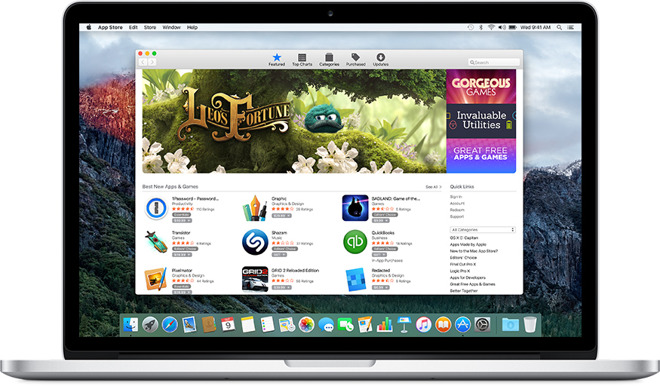
The developer-reported information—all the different types of data being collected, how the data is linked to the user (if at all), and whether the data is used for tracking purposes—will be displayed on the app’s page in the iOS App Store and Mac App Store, Apple said in the developer support page. There is no exception for this—new and existing apps must have this information if they are to remain in the app stores.
The goal is to make it easy for the user to know exactly what the app will do before installing the app.
Related: 6 Best Cross-Platform Note Apps for Windows, Mac, iOS & Android. Whether we need to jot down our thoughts or make a list of things to remember, we need a good note taking the app to do so. Coming in diverse abilities and features, the tools in this list are there to help you to remember easily and quickly whenever you want. Mac App Store is the simplest way to find and download apps for your Mac. To download apps from the Mac App Store, you need a Mac with OS X 10.6.6 or later. Jun 22, 2020 Aside from iOS14 and MacOS Big Sur, Apple also announced that iPad and iPhone apps will now be able to run natively on ARM-powered Macs. This means that now all iOS apps will be able to run on Mac. Mac App Store is the simplest way to find and download apps for your Mac. To download apps from the Mac App Store, you need a Mac with OS X 10.6.6 or later.
Developers have to submit the information—such as names, email addresses, contact numbers, and physical addresses—through the App Store Connect website, and identify all possible uses for that data. That is the case even if the app is using it for limited purposes. For example, if the app needs the user’s location, it will be displayed on the label (even if it never gets shared with third parties).
Apple said it would start requiring developers to provide this information back during WWDC 2020 in June. The requirement goes hand-in-hand with iOS 14’s ad anti-tracking feature. The goal is to make that information readily available at the moment the app is being downloaded and installed, instead of making users scroll through lengthy and often confusing privacy policies.
Even the most privacy-conscientious users have a difficult time understanding what apps are doing with their data. A recent Duo Labs research found that data brokers have a lot of information about users that were collected via apps, but users rarely know which apps provided which piece of information to the brokers. The only way to even start untangling that snarl of data relationships is to look at what software development kits app developers are using, or to trace data partners from one app to another. It is time-consuming and the user still doesn't have a complete picture.
Apple’s requirement to force developers to reveal what apps are doing with user data is a good step for privacy, but the fact that this is developer-provided means there are too many loopholes. It is up to the developer to make sure the labels are up-to-date and reflect the latest information whenever changes are made or functionality added. There doesn’t seem to be a mechanism for Apple to verify developers are telling the whole truth about their data partnerships, so users are left hoping that maybe they know enough from the labels to make an informed choice.
The developer-provided responses should “follow the App Store review guidelines and applicable laws,” Apple said on its developer page. “Examples of data that may not need to be disclosed include data collected in optional feedback forms or customer service requests that are unrelated to the primary purpose of the app and meet the other criteria above. For the purpose of clarity, data collected on an ongoing basis after an initial request for permission must be disclosed.”
IOS (formerly iPhone OS) is a mobile operating system created and developed by Apple Inc. Exclusively for its hardware.It is the operating system that powers many of the company's mobile devices, including the iPhone and iPod Touch; it also powered the iPad until the introduction of iPadOS, a derivative of iOS, in 2019.It is the world's second-most widely installed mobile operating system. Mac App Store is the simplest way to find and download apps for your Mac. To download apps from the Mac App Store, you need a Mac with OS X 10.6.6 or later.
macOS Big Sur takes the most advanced operating system in the world to a whole new level of power and beauty, making your apps look better than ever on an all-new interface. New widget features and the new widget gallery help you deliver more value to your users. Adding intelligence to your apps with machine learning is even simpler and more extensive with new tools, models, training capabilities, and APIs. You can create more powerful Mac versions of your iPad apps with Mac Catalyst. And you can now easily bring your extensions to Safari — and to the App Store.
All-new Interface
macOS Big Sur brings a new design that’s been finely tuned for the powerful features that make a Mac a Mac. Core features, such as the menu bar and Dock, take advantage of the large Mac display, with translucent backings and spacious pull-down menus. The new Control Center, designed just for Mac, provides quick access to controls while keeping the menu bar clutter-free. Notification Center puts recent notifications and powerful new widgets together in a single view for at-a-glance information as you work. And a streamlined new design for apps features full-height sidebars and integrated toolbar buttons.
Widgets
Easily build widgets using the WidgetKit framework and the new widget API for SwiftUI. Widgets now come in multiple sizes, and users can visit the new widget gallery to search, preview sizes, and add them to Notification Center to access important details at a glance.
Safari Extensions
With support for the popular WebExtension API, it’s even easier to bring powerful extensions to Safari. Xcode 12 even includes a porting tool to streamline the process.
The new Extensions category on the Mac App Store showcases Safari extensions, with editorial spotlights and top charts to help users discover and download great extensions from the developer community.
Machine Learning
With macOS Big Sur, creating apps that leverage the power of machine learning is even easier and more extensive with additional tools in Core ML for model deployment, new models and training capabilities in Create ML, more APIs for vision and natural language, and improved resources for training on Mac and converting models to Core ML format.
Mac Catalyst
Create even more powerful Mac versions of your iPad apps. Apps built with Mac Catalyst now take on the new look of macOS Big Sur and help you better define the look and behavior of your apps. You can choose to turn off automatic scaling of iPad controls and layout, allowing you to precisely place every pixel on the screen. Provide full control of your app using just the keyboard, take advantage of the updated Photos picker, access more iOS frameworks, and more.
User privacy on the App Store.
Mac Store Apps
Later this year, the Mac App Store will help users understand apps’ privacy practices. You’ll need to enter your privacy practice details into App Store Connect for display on your product page.

Ios And Mac Apps App
Universal App Quick Start Program
How to download an ios app onto a mac. Get your apps ready for Apple Silicon Macs. Create next-generation Universal apps that take full advantage of the capabilities the new architecture has to offer. Get all the tools, resources, support, and even access to prototype hardware you’ll need. You can also watch a collection of videos from WWDC20 to help you get started.
Mac Apps Apple
Tools and resources
Ios And Macos Performance Tuning
Use Xcode 12 and these resources to build apps for macOS Big Sur.